Trade Techniques for Large-Scale Event Floral Installations
Posted on 03/10/2026
Large-scale event florals look effortless from the room, but behind that polished first impression is a stack of trade know-how: planning, mechanics, transport, conditioning, rigging, timing, and a lot of calm problem-solving. Trade Techniques for Large-Scale Event Floral Installations are the practical methods professionals use to design, build, move, and secure substantial floral work for weddings, corporate launches, awards nights, hospitality spaces, and branded activations.
If you have ever watched a foyer fill with flowers at 6 a.m. and wondered how it all arrived intact, you are in the right place. This guide breaks down the process in plain English, with a focus on what actually helps on a real event day. What do you need to plan first? How do you keep blooms fresh? Where do the hidden risks sit? And how do you avoid the classic "it looked fine in the workshop" moment? Let's get into it.
Why Trade Techniques for Large-Scale Event Floral Installations Matters
Large installations are not just "bigger bouquets". They are structural, logistical, and often time-critical. A floral arch, hanging meadow, stage garland, branded display, or entrance feature has to survive travel, fit the venue, and hold its shape under real-world conditions. Sometimes that means stairs, service lifts, awkward loading bays, or a venue team asking you to clear the room by half seven. Standard florist skills are still important, of course, but large-scale work needs trade techniques that reduce failure points.
Good technique protects the flowers, the budget, and everyone's nerves. It also protects the brand experience. For a corporate event, the floral build may be the first thing guests see. For a wedding, it frames the ceremony photos that people will keep forever. Truth be told, people rarely notice the mechanics when everything is done well. They just notice how seamless it feels.
That is the point. These techniques matter because they turn a creative idea into something buildable, safe, transportable, and repeatable. They also help you scale without losing quality. A single urn arrangement and a ten-metre floral runner are related, but not remotely the same challenge.
How Trade Techniques for Large-Scale Event Floral Installations Works
The process usually starts long before the first stem is cut. Professional event floristry is part design work, part engineering, and part logistics. You begin by interpreting the brief, then you decide on form, flower types, mechanics, mounting points, and delivery sequence. That is the clean version. In practice, there are site checks, revised measurements, weather considerations, and the odd last-minute tweak because the client suddenly wants more height. Happens all the time.
A strong workflow usually includes five stages:
- Brief and venue assessment - understand the concept, access, ceiling height, power points, loading routes, and any restrictions.
- Design and build planning - turn the concept into a structure that can actually hold the flowers.
- Flower conditioning and prep - hydrate, sort, trim, and stage materials so they perform well on the day.
- Workshop assembly or partial pre-build - construct sections in a controlled space where you can troubleshoot safely.
- Transport, on-site installation, and final dressing - move it carefully, install securely, then refine details on site.
At this level, floristry depends on repeatable systems. The best teams use templates, labelled crates, installation maps, and colour-coded zones. They also think in sections. A giant floral ceiling piece is usually easier to manage as modular units rather than one impossible object. Modular work sounds less glamorous, but it is what keeps a project sane.
In our experience, the most successful builds are the ones where the creative idea and the technical plan are developed together, not separately. If the design is beautiful but impossible to rig, it creates stress later. If the structure is sound but visually flat, the room feels underwhelming. You need both.
Key Benefits and Practical Advantages
When trade techniques are used properly, the gains are obvious. The flowers last longer, the installation looks cleaner, and the crew spends less time improvising under pressure. That alone is worth a lot on a busy event day.
- Better structural stability - secure mechanics prevent sagging, tilting, and collapse.
- Improved freshness - smart conditioning and staging keep blooms looking better for longer.
- Cleaner visual finish - hidden support systems allow the design to shine.
- Faster set-up on site - pre-planned modules reduce time in the venue.
- Lower waste - fewer failed elements means less rework and less discard.
- More confident budgeting - proper planning reduces emergency purchases and wasted labour.
- Better client trust - the project looks organised, and that matters more than people think.
There is also an emotional benefit. A well-built floral installation changes the atmosphere of a room in seconds. It can soften a modern hotel ballroom, give a brand launch a luxurious edge, or bring warmth to a stark gallery space. You notice it immediately when you walk in. The room feels considered.
Who This Is For and When It Makes Sense
These techniques are relevant to florists, event designers, production teams, wedding stylists, venue teams, and anyone responsible for high-impact decorative work. They are especially useful if you handle events where scale, access, and timing matter as much as style.
This approach makes sense when you are working on:
- ceremony arches and aisle installations
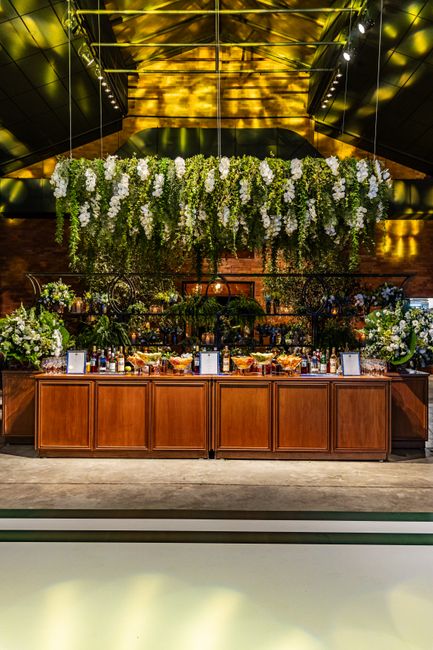
- hanging florals and suspended centrepieces
- stage dressing and media backdrops
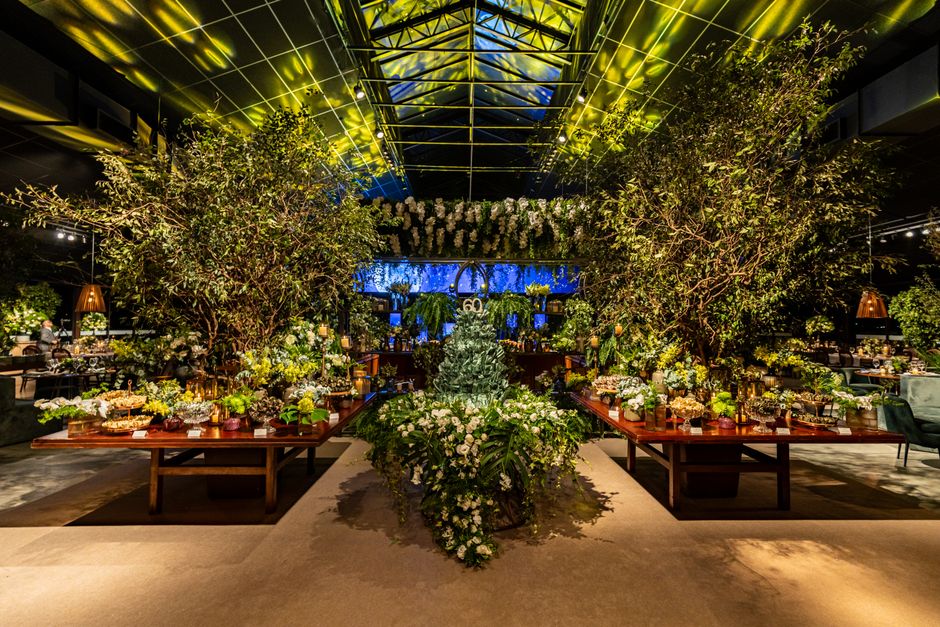
- large entrance pieces and reception statements
- corporate branding environments
- hospitality launches and seasonal display builds
- premium weddings with multiple floral touchpoints
It is also relevant if your business is growing. Once you move beyond hand-tied bouquets and small tablescapes, the questions change fast. How many people does the install need? Can the venue take the weight? How do you deliver without damaging petals? What if the lift is too small? These are the real questions, not the prettiest ones.
If you work with products like bridal bouquets, table arrangements, or wedding flowers, the same principles scale upward. The materials change, but the discipline stays the same.
Step-by-Step Guidance
Here is a practical way to approach a large-scale floral installation without losing your mind halfway through.
1. Start with the venue, not the vase
Measure the space properly. Check ceiling points, wall fixings, access doors, service corridors, and the nearest place you can safely park or unload. A beautiful design sketch means very little if it cannot physically get into the room. Ask for floor plans if they exist, but never rely on them blindly. A quick site visit tells you more than a dozen emails.
2. Build the design around support and movement
Decide early whether the structure will be freestanding, wall-mounted, suspended, or fixed to a hidden base. Then think about transport. Will it fit in a van? Can it be split into two or three sections? Will it need on-site assembly in a quiet corner? These choices affect everything from flower selection to labour scheduling.
3. Choose flowers for performance, not just appearance
Some blooms look amazing but are fragile under heat, handling, or long transit. Others are tougher and better suited to long events. A mix is often best. For large installations, event florists commonly use a blend of focal flowers, supporting flowers, and foliage to balance impact with durability. If a design needs romance, structure, and substance, roses, hydrangeas, chrysanthemums, alstroemeria, lilies, and greenery may all play a role depending on the brief.
4. Pre-build smartly
Whenever possible, assemble sections in the workshop. That gives you a controlled environment, better lighting, and time to spot weak points before you are standing in a ballroom with a drill in one hand and a cable tie in the other. Pre-building also helps with quality control. You can photograph sections, note dimensions, and recreate the same look later if needed.
5. Manage hydration and temperature
Fresh flowers are living material. Keep them cool, but not cold enough to shock delicate blooms. Give them enough water, but not so much that transport becomes messy. If the build is happening over several hours, plan refresh breaks. Even a very glamorous installation still needs buckets, towels, and a realistic hydration strategy.
6. Transport in stages
Use labelled crates, stable trays, and secure packing so each section arrives in the right order. Heavy pieces should travel low and braced. Fragile florals need protection from movement and heat. If you are doing a night-before build, double-check where the van is parked, who has the keys, and who is on first call in the morning. Small things, big difference.
7. Install safely and finish last-mile details
Once on site, install the structure first, then dress it with flowers, then refine the edge lines and focal points. That order matters. If you rush the finish before the base is secure, you will only undo your own work later. The final dressing is where a design goes from "good" to "that looks expensive".
Expert Tips for Better Results
The little decisions often make the biggest difference. A few things seasoned teams tend to do well:
- Work in zones - divide the installation into sections so each area can be built, checked, and corrected independently.
- Use consistent mechanics - choose support systems you know well instead of experimenting on a live event.
- Keep a "finish kit" - snips, tape, zip ties, floral wire, spare ribbons, wipes, and wire cutters should all be within reach.
- Photograph each stage - it helps with repeat orders, training, and troubleshooting.
- Over-spec the hidden structure - clients never complain that the support is too solid.
- Assign one final quality check person - too many eyes can mean nobody owns the last detail.
One small but useful habit: keep a short note of what wilted, what stayed strong, and what was awkward to install. The next job will thank you. So will your future self, which is basically the same person but more tired.
Rhetorical question time: why spend hours designing a gorgeous floral moment if the base plan is fragile? Exactly. The strongest work is usually the least dramatic backstage.
Common Mistakes to Avoid
Most large-installation problems come from a few familiar traps. They are boring mistakes, really, which is annoying because boring mistakes are the most expensive ones.
- Underestimating access - a design that fits the mood board may still fail at the loading bay.
- Ignoring weight - flowers, water, foam, frames, and fixings add up quickly.
- Building too much in one piece - oversized units are harder to transport and harder to correct.
- Leaving no contingency time - events love surprises; schedules should not.
- Choosing delicate flowers for harsh conditions - heat and handling can flatten the best intentions.
- Not labelling sections - confusion on site can turn a calm install into a scramble.
- Forgetting venue rules - some spaces have strict limits on fixings, flame effects, or floor protection.
Another common issue is overdecorating. More flowers do not always mean more impact. Sometimes a cleaner line, stronger rhythm, or more deliberate negative space gives the whole installation a better read from across the room. Less can be more. Cheesy, yes, but true.
Tools, Resources and Recommendations
You do not need every gadget on earth, but you do need the right kit. For large-scale event floral work, the practical basics matter more than fancy extras.
| Tool or resource | Why it helps | Best use case |
|---|---|---|
| Floral snips and strong cutters | Clean trimming and faster prep | Workshop prep and site finishing |
| Crates and labelled transport tubs | Reduces damage and confusion | Modular builds and fragile stems |
| Water sources and hydration containers | Supports freshness during long setups | Multi-hour installs or overnight work |
| Wire, tape, ties, and fixing materials | Hidden structure and secure detailing | Frames, arches, and support systems |
| Step ladder or venue-approved access equipment | Safe work at height | Suspended florals and high dressing |
| Mock-up boards or test builds | Helps confirm scale and mechanics early | Client approval and complex concepts |
It also helps to maintain a small reference library of past installs, notes on flower performance, and preferred mechanics for different venue types. A lot of the job is memory, but tidy memory. Not the messy kind where you are halfway to the venue and suddenly remember you needed a different fixing.
If your project involves premium gifting or accompanying floral pieces for event guests, some related product types like corporate gifting, luxury flowers, and all flowers can help maintain a consistent style across the wider event experience.
Law, Compliance, Standards, or Best Practice
Large installations often sit close to areas where health and safety, venue policy, and local rules matter. This is not the glamorous part, but it is essential. In the UK, venues may have their own risk assessment requirements, access rules, and restrictions on what can be fixed to walls, ceilings, or floors. Electrical equipment, ladders, lifting methods, and working at height should all be handled carefully and in line with the venue's expectations and relevant workplace safety practice.
Best practice usually means:
- carrying out a proper site assessment before the event
- confirming who is responsible for access and sign-off
- using suitable equipment for the height and weight involved
- protecting floors, walls, and furniture where required
- planning safe manual handling for heavier floral structures
- keeping walkways clear during install and derig
If you are installing in a listed building, hotel, public venue, or high-footfall space, check expectations early. The safest route is the simplest one: ask, document, and confirm in writing. The paperwork can feel dull, I know, but it saves headaches later.
Where a build is especially complex, involve the venue team, event producer, and any relevant contractor early enough to avoid last-minute compromise. That is rarely the exciting part of planning, but it is what keeps the whole thing steady.
Options, Methods, or Comparison Table
Different installations call for different methods. The right choice depends on scale, venue conditions, timing, and the level of visual drama you want. Here is a simple comparison of common approaches.
| Method | Strengths | Limitations | Best for |
|---|---|---|---|
| Freestanding structures | Flexible, venue-friendly, easier to reposition | Can take more floor space | Arches, entrances, statement pieces |
| Suspended installations | Creates major visual impact with minimal floor use | Needs secure overhead fixing and careful planning | Ceiling florals, hanging gardens, dramatic room reveals |
| Wall-based installations | Strong backdrop effect, great for photo moments | Depends on fixings and venue permission | Brand walls, ceremony backdrops, stage features |
| Modular floor builds | Easy to transport and assemble | Requires careful alignment on site | Long runners, meadow edges, pathway dressings |
If you are deciding between methods, ask one practical question first: what is the venue actually willing and able to support? The most beautiful design is not always the best design for the room. A modular approach often wins when access is tight. Suspended florals, on the other hand, can be spectacular in spaces that allow them. It depends. It really does.
Case Study or Real-World Example
Imagine a late-summer wedding reception in a London hotel ballroom. The brief is for a soft, romantic atmosphere with a strong entrance feature, a ceremony backdrop that can later become a photo wall, and table florals that do not block conversation. The room has a low-ish ceiling, a narrow service lift, and a strict turnaround window between afternoon and evening use.
In that scenario, the team would likely avoid one huge one-piece build. Instead, they would create modular sections: a freestanding ceremonial frame, clipped floral panels for the backdrop, and table arrangements built with lower profiles. The entrance arrangement might use a stronger flower mix for shape and durability, while the backdrop uses denser greenery and focal blooms placed more sparingly so the structure reads well from a distance.
On the day, the workshop pre-build saves time. The team arrives with sections labelled by zone, the mechanics already checked, and the final flowers packed separately for on-site dressing. A few blooms always need a tweak, of course. They nearly always do. But the overall install moves smoothly because the team has planned for the room rather than forcing the room to accept the design.
That is the real lesson. Good large-scale floral work is not about brute force. It is about thoughtful adaptation.
For a reception like this, pieces similar in feel to Pure Romance or White Wonders Wedding Collection would inform the palette, while supporting products like The Perfect Match Wedding Collection could help keep the wider styling consistent across the event.
Practical Checklist
Use this before any large floral installation. It is simple, but it catches a lot.
- Venue measured and access confirmed
- Load-in and load-out times agreed
- Structure method chosen and tested
- Flower choices checked for durability
- Hydration plan in place
- Transport crates labelled clearly
- Tools packed and spare fixings included
- Risk assessment and venue requirements reviewed
- Team roles assigned
- Final dressing time protected in the schedule
- Photographs planned for records and approvals
- Contingency materials ready for last-minute changes
Expert summary: the best large-scale floral installations are built on three things: a realistic structure, flowers chosen for the conditions, and a clear on-site plan. If one of those is weak, the whole job starts wobbling. If all three are solid, the design feels effortless, and that is exactly what clients remember.
Conclusion
Trade Techniques for Large-Scale Event Floral Installations are what turn ambitious floral ideas into polished, dependable event features. They help you manage scale without losing elegance, move efficiently without damaging product, and create installations that feel both beautiful and secure. Whether you are planning a wedding backdrop, a corporate ceiling piece, or a full-room floral takeover, the principle stays the same: design for the room, build for the journey, and finish with care.
The more you work this way, the more natural it becomes. You start to see load-in routes as clearly as colour palettes. You begin to notice where a structure needs support before it becomes a problem. And, honestly, that calm confidence is half the craft.
Get a free quote today and see how much you can save.
Beautiful event florals should feel alive, not stressful. Get the method right, and the room does the rest.
Frequently Asked Questions
What are trade techniques for large-scale event floral installations?
They are the professional methods used to plan, build, transport, and install large floral features safely and efficiently. That includes structure, mechanics, hydration, handling, and on-site finishing.
Why can't large installations just use the same methods as bouquets?
Because scale changes everything. Weight, access, timing, and support become much more important. A bouquet only needs to look good in the hand; a large installation has to stay intact in a real venue for hours.
What flowers work best for large event installs?
It depends on the brief and the conditions, but durable blooms like roses, chrysanthemums, alstroemeria, lilies, hydrangeas, and strong foliage are commonly used because they hold structure well. Fragile flowers can still be used, just more carefully.
How do you keep event flowers fresh during a long installation day?
Hydrate them well, store them at the right temperature, keep them out of harsh heat or direct sun, and stage them in sensible batches. Timing matters too. Flowers should be out of water for the shortest practical time.
Do large floral installations need a site visit?
Ideally, yes. A site visit helps you check access, ceiling height, fixings, floor protection, and turnaround timing. It often prevents expensive surprises later.
What is the safest way to build a floral installation?
Build the structure first, test stability, then add flowers and finish details last. Also use the right access equipment, follow venue rules, and avoid overloading any fixings or frames.
How far in advance should a large floral installation be planned?
As early as possible, especially for complex builds or busy venues. The bigger the piece, the more time you need for design approval, sourcing, logistics, and contingency planning.
What is the biggest mistake people make with large floral displays?
Underestimating the practical side. People often focus on the look and forget access, weight, transport, or venue restrictions. That is where problems start.
Are suspended floral installations suitable for every venue?
No. They depend on the venue's structure, permissions, and safe fixing points. Some spaces are ideal; others simply are not. Always check before designing around a hanging feature.
How do modular floral builds help?
Modular builds are easier to transport, easier to install, and easier to adjust on site. They are a smart choice when access is tight or the venue turnaround is short.
What should be in a florist's event install kit?
At minimum: snips, cutters, tape, wire, ties, spare fixings, wipes, towels, and a clear labelling system. A few extra tools save a lot of running around later.
Can large-scale floral installations be budget-friendly?
Yes, if the structure, flower choice, and build method are planned carefully. Using reusable mechanics, modular sections, and durable flowers can stretch the budget without making the design feel cheap.
What should I ask a florist before booking a large installation?
Ask about venue experience, build method, access planning, installation timing, contingency options, and how they handle transport and on-site finishing. Those questions tell you a lot about how organised they really are.